What is STEM Education? – Concept, Purposes and Uses for Students.
February 27, 2023 2023-02-27 0:00What is STEM Education? – Concept, Purposes and Uses for Students.
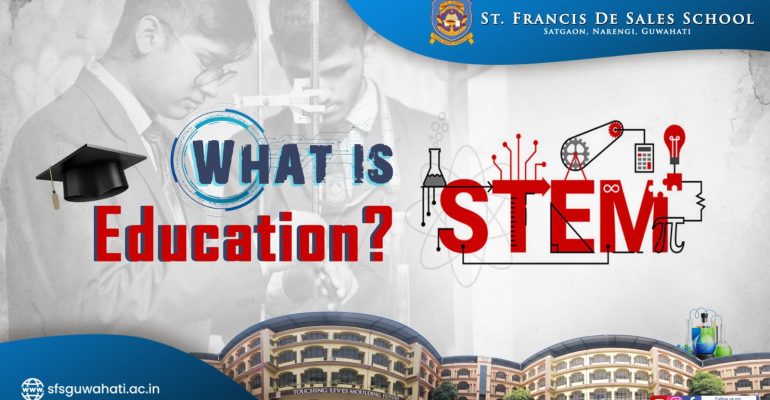
STEM classrooms typically focus on project-based learning. Projects and activities conducted usually involve modern technology to accentuate the practical applications of science in the near future. That is why best schools in Guwahati are keeping STEM classes as a part of their curriculum. Students get to apply the various domains of STEM in a context that helps them realize a connection between the classroom and the world around them. STEM education is an approach to teaching and learning. Let us now understand What is STEM?
What is STEM?
STEM is something that focuses on four key areas: Science, Technology, Engineering, and Mathematics. STEM education integrates these four subjects into a cohesive and interdisciplinary curriculum, with the goal of preparing students for careers in these fields.
STEM education is designed to help students develop a strong foundation in these subjects by engaging them in hands-on learning experiences, problem-solving, critical thinking, and collaboration. STEM education also emphasizes the development of skills such as creativity, innovation, and communication, which are essential for success in today's rapidly changing workforce.
STEM education is increasingly important in today's world, as many of the fastest-growing and highest-paying jobs require skills in these areas. By providing students with a strong STEM education, we can help them develop the skills they need to succeed in the 21st-century workforce and contribute to the advancement of science and technology.
STEM education offers a range of benefits for students. Here are some of the key uses of STEM education for students:
1) Career preparation:
STEM education can help prepare students for a wide range of careers in science, technology, engineering, and mathematics. By developing skills in these areas, students can be better prepared for the jobs of the future.
2) Problem-solving:
STEM education encourages students to think critically and creatively, which can help them develop effective problem-solving skills. These skills are valuable not only in STEM fields but in many other areas of life.
3) Innovation & Collaboration:
STEM education promotes innovation by encouraging students to think outside the box and come up with creative solutions to problems. STEM education often involves working in teams, which can help students develop valuable collaboration and communication skills.
4) Real-world relevance:
STEM education is often designed to be relevant to real-world problems and issues, which can help students understand the practical applications of what they are learning.
5) Future readiness:
STEM education can help prepare students for the challenges and opportunities of the future by developing their skills and knowledge in areas that are becoming increasingly important in our rapidly changing world.
Overall, STEM education can provide students with the tools they need to succeed in the 21st-century workforce and make valuable contributions to society.
STEM Education has become an international topic of discussion over the past decade. This is driven by the changing global economy and workforce needs that indicate there will be a shortage of STEM prepared workers and educators around the world.
Overall, STEM education in schools is a valuable approach to teaching and learning that prepares students for the challenges and opportunities of the 21st century. By integrating science, technology, engineering, and mathematics into a cohesive curriculum, students are provided with the skills and knowledge needed to succeed in a rapidly changing world.