ROLE OF AI (ARTIFICIAL INTELLIGENCE) IN THE EDUCATION SECTOR
February 19, 2023 2023-02-19 0:00ROLE OF AI (ARTIFICIAL INTELLIGENCE) IN THE EDUCATION SECTOR
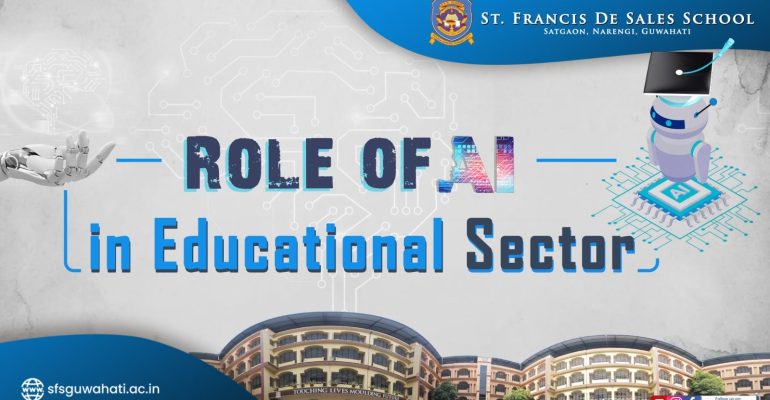
Artificial intelligence (AI) plays an increasingly important role in the education sector, transforming how we learn, teach, and assess student performance. Artificial Intelligence (AI) is a field of computer science that focuses on the development of intelligent machines that can perform tasks that typically require human intelligence, such as learning, problem-solving, and decision-making.
Artificial Intelligence is a branch of science producing and studying machines aimed at the stimulation of human intelligence processes.
AI technologies have been rapidly advancing in recent years, and they have the potential to transform a wide range of industries, including healthcare, finance, manufacturing, and transportation, to name a few. The use of Artificial Intelligence (AI) has been gaining popularity in the education sector in recent years, as educators and policymakers look for ways to enhance the quality of teaching and learning. AI has the potential to transform the education sector, making it more effective and efficient. In this blog, we will discuss the importance of AI in education.
1) Personalized Learning
One of the most significant benefits of AI in education is its ability to personalize learning. AI algorithms can analyze student data and tailor learning experiences to the individual needs of each student. This means that teachers can create customized lesson plans and provide targeted support to struggling students. Personalized learning has been shown to improve student engagement, motivation, and achievement.
2) Intelligent Tutoring
AI-powered tutoring systems can provide students with personalized, one-on-one support that is available 24/7. These systems can track student progress and adjust their instruction accordingly. This can be particularly helpful for students who may not have access to a tutor or who may need additional support outside of regular class hours.
3) Automating Administrative Tasks
AI can automate many administrative tasks, such as grading assignments and creating reports. This frees up teachers' time, allowing them to focus on teaching and providing support to their students. Automating administrative tasks also reduces the potential for human error, ensuring that grading and reporting are accurate and reliable.
4) Enhanced Learning Experiences
AI can enhance the learning experience through interactive, immersive simulations and virtual environments that provide students with hands-on learning opportunities. For example, AI-powered simulations can provide students with virtual experiences that would be difficult or impossible to replicate in the real world, such as exploring a historical site or conducting a scientific experiment.
5) Predictive Analytics
AI can analyze student data to predict which students are at risk of falling behind and provide early interventions to prevent them from falling off track. Predictive analytics can help teachers identify students who may need additional support and provide targeted interventions before it's too late.
6) Language Translation
AI-powered language translation tools can help students and teachers communicate in different languages, making education more accessible to students from diverse backgrounds. This can help to break down language barriers and ensure that all students have equal access to educational opportunities.
At present young people tend to use lot of time using their smartphones or tablets. This gives them a chance to study for ten to fifteen minutes in their free time by using AI applications. AI helps us understand the mood or ease of students during lectures by using Gesture Recognition Technology. Since AI becomes more sophisticated the machine reads the facial expressions or gestures of the student and uses them to know if the student is struggling to understand the lecture and alter the lesson so that the student can follow up easily.
In conclusion, AI has the potential to revolutionize education by making it more personalized, efficient, and effective. AI-powered educational tools can provide students with customized learning experiences that are tailored to their individual needs and abilities, while also automating administrative tasks and providing teachers with more data-driven insights into student performance. With continued development and innovation, AI has the potential to make education more accessible and effective for all students.