
THE POWER AND ADVANTAGES OF 5G TECHNOLOGY
January 1, 2023 2023-01-01 0:00THE POWER AND ADVANTAGES OF 5G TECHNOLOGY
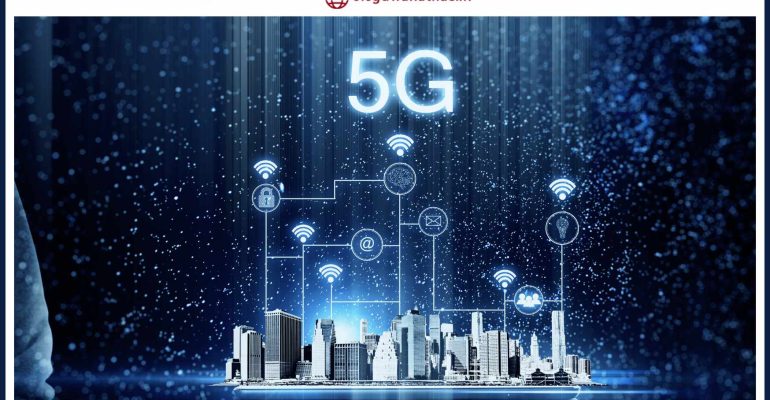
Dr. Christoph Grote once said that the 5G technology will become the worldwide dominating mobile communications standard of the next decade.
Mobile wireless communication networks passed a long journey from the first generation (1G), an analog signal with limited use cases, to the fourth generation (4G) and LTE, which is an evolution of mobile technology and attributed to overcome many limitations of previous generations, such as low bandwidth and low data rate. However, with constant increasing number of wireless devices and increasing users population, an initial development of the next generation of mobile communication, which is called 5G, has been started to address many requirements and limitations of today's and upcoming future, such as the need of higher bandwidth and higher data rate, by considering wide scenarios of use cases including smart city, smart home, industrial automation and smart factory. Finally, at the end of 2018, the initial edition of 5G has been delivered and implemented in different parts of the world.
With the times changing and technology advancing from the 1st generation we all have come to 5G now. 5G refers to the fifth generation of wireless technology supporting cellular data networks. the 5G network promises to provide speeds of up to 100 gigabytes per second. 5G is said to be 40 to 100 times faster than the 4G network. The 5G rollout will forever change how we regard the internet and directly impact job creation in the telecom sector. It will also have a massive impact on how we work, interact with each other, travel, and more. Healthcare, agriculture, logistics, manufacturing, and automotive will change rapidly, as the 5G allows quicker adoption of several other technologies. This will have a direct impact on job creation across all these sectors. However, the skills required from the future workforce will be vastly different from what is in demand today. The recent 5G spectrum trials by a leading telecom player clocked speeds of 1 gbps. The implications of the availability of such speed are massive across all sectors. The pace of the adoption of new technologies will ramp up rapidly, creating new jobs.
Advantages of 5G Service -
- The most-discussed 5G feature is increased speed and bandwidth. With a data rate of up to 10 Gbps, 5G will bring 10 times to 100 times improvement over the existing 4g technology. Cellular is now a potential technology for branch office automation because WAN connections finally have enough bandwidth. For businesses, the real benefit of 5G might not be the actual bandwidth, but the pressure that 5G exerts on market prices of incumbent WAN connectivity.
- 5G density enables up to 100 times more connected devices in the same physical area that 4G LTE operates today while maintaining 99.999% availability. While this density may bring business advantages for mobile workforces, the real benefit is increasing the size of the mobile customer market. Mobile e-commerce is growing faster than retail and traditional computer-based e-commerce. More customers than ever use mobile technologies to shop online, so greater density increases the overall addressable market.
- An estimated 90% reduction in power consumption for devices means minor power savings at the smartphone level. But, from an infrastructure perspective, especially for IoT devices, the power savings could be significant. Combining IoT devices with cellular 5G communication means lower power overhead in the design and actual consumption. Remote devices can be expected to last significantly longer when running on battery alone. Some estimates even show that a 10-year remote battery life may be achievable for IoT-based sensor devices deployed in remote locations.
- The 5G also allows to implement virtual networks (network slicing), create subnets, in order to provide connectivity more adjusted to specific needs. The creation of subnetworks will give specific characteristics to a part of the network, being a programmable network and will allow to prioritize connections, as could be the emergencies in front of other users, applying for example different latencies or prioritizing them in the connection to the network so that they can’t be affected by possible overloads of the mobile network.
This new era of 5G will bring together improved connectivity, cloud-based storage, and an array of connected devices and services. Extensive computing capability combined with virtual system architecture will open up a mobile internet of things (IoT). Advanced digital networks will bring together a system that connects billions of devices and sensors enabling advances in health care, education, resource management, transportation, agriculture, and many other areas. 5G is not simply an extension of 3G and 4G. Instead, it is a transformative ecosystem that includes a heterogeneous network that integrates 4G, Wi-Fi, millimeter wave, and other wireless access technologies. It combines cloud infrastructure, a virtualized network core, intelligent edge services, and a distributed computing model that derives insights from the data generated by billions of devices. Connected devices will enable people to enjoy more personalized, more immersive, and more enhanced experiences whenever and wherever they are. With the costs of devices and sensors coming down considerably, connectivity will be ubiquitous and unobtrusive. Rather than having to make a conscious decision to issue a computing command, people will have systems that take actions based on the predetermined preferences of that individual.
Also with the coming of 5G, it will be of great help to the students when / if used for fruitful purposes as the internet is now a part of the daily routine in studies. During the covid times, schools, colleges and universities run their classes through online mediums only and that is why with the coming of 5G it would be more beneficial to students as they can connect faster and better.