
CREATIVITY IN KIDS: UNDERSTANDING AND ENHANCING CREATIVE POTENTIAL
July 22, 2024 2024-07-22 6:39CREATIVITY IN KIDS: UNDERSTANDING AND ENHANCING CREATIVE POTENTIAL
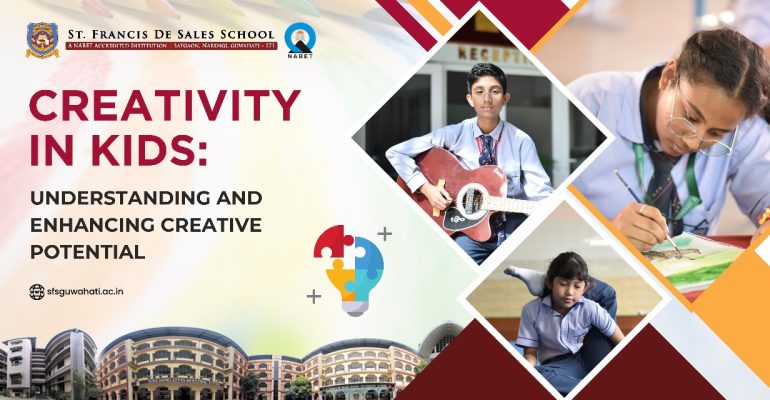
Creativity is the spark that ignites the imagination, fuelling innovation and problem-solving. It's a vital skill that transcends the realms of art and literature, seeping into every aspect of life, from scientific inquiry to everyday tasks. Creativity in Kids is not just about drawing or crafting; it's a way of thinking, a means of exploring the world, and an essential component of their overall development. As parents, educators, and caregivers, understanding what creativity is and how to nurture it in children can pave the way for a future generation brimming with original thinkers and doers.
What is Creativity in Kids?
Creativity in Kids, at its core, is the ability to generate new and valuable ideas. It's the capacity to see the world differently, to make connections between seemingly unrelated concepts, and to come up with innovative solutions to problems. Creativity in Kids is not confined to the arts; it manifests in science, technology, mathematics, and daily problem-solving. For children, it involves imagination, curiosity, and the willingness to take risks and make mistakes.
Children are naturally creative. From the moment they begin to explore their surroundings, they engage in creative activities—whether it’s stacking blocks in unconventional ways, imagining fantastical worlds, or asking endless “why” questions. This innate creativity, however, can either flourish or diminish depending on the environment and experiences they are exposed to.
Why is Creativity in Kids Important?
Cognitive Development: Creativity enhances cognitive abilities, improving problem-solving skills, critical thinking, and the capacity for abstract thought. Creative activities stimulate brain development and can lead to better academic performance.
Emotional Expression: For children, creative activities are a means of expressing their emotions and experiences. This can be particularly beneficial in helping them process complex feelings and reduce stress.
Social Skills: Collaborative creative activities, such as group projects or team games, teach children important social skills like communication, cooperation, and empathy.
Adaptability: A creative mindset helps children adapt to new situations and challenges. It fosters resilience, encouraging them to view setbacks as opportunities for learning rather than failures.
Lifelong Learning: Encouraging creativity instills a love for learning and discovery that can last a lifetime. Creative children are often more curious and engaged learners.
How to Enhance Creativity in Children
Nurturing creativity in children requires a deliberate effort to create an environment that encourages exploration, risk-taking, and the free exchange of ideas. Here are some strategies to enhance creativity in kids:
Provide a Rich Environment - Create a stimulating environment filled with diverse materials and experiences. This doesn’t mean expensive toys or elaborate setups; rather, it involves providing a variety of simple, open-ended materials that children can use in multiple ways. Art supplies, building blocks, recycled materials, and nature items can all spark creativity.
Encourage Play - Play is a crucial component of creativity. Through play, children experiment, explore, and make sense of the world around them. Encourage different types of play, from imaginative and role-playing games to constructive and physical play. Allow for unstructured playtime where children can follow their interests without specific goals or outcomes.
Promote Problem-Solving - Give children opportunities to solve problems on their own. Instead of providing immediate solutions, ask guiding questions that help them think through the issue. Puzzles, brainteasers, and open-ended questions can stimulate creative problem-solving skills.
Value Process Over Product - Shift the focus from the final product to the creative process itself. Praise effort, experimentation, and persistence rather than the end result. This approach helps children understand that creativity is about exploration and growth, not just producing something “perfect.”
Foster a Growth Mindset - Encourage a growth mindset by emphasizing that abilities and intelligence can be developed through effort and practice. Teach children that mistakes are a natural part of learning and creativity. Celebrate their attempts and progress, fostering a positive attitude towards challenges.
Encourage Curiosity and Questions - Curiosity is the driving force behind creativity. Encourage children to ask questions, no matter how simple or complex. Provide them with opportunities to explore their interests and find answers independently. Create a culture where questioning and curiosity are valued.
Integrate Arts into Daily Life - Incorporate various forms of art into daily routines. This can include drawing, painting, music, dance, and storytelling. Artistic activities help children express themselves and develop their creative thinking. Make art supplies readily available and participate in artistic endeavors together.
Limit Screen Time - While technology can be a tool for creativity, excessive screen time can hinder imaginative play and face-to-face interactions. Set limits on screen time and encourage activities that involve physical movement, hands-on exploration, and real-world engagement.
Model Creativity - Children learn by observing the adults around them. Show your own creative side, whether it’s through cooking, gardening, crafting, or problem-solving. Share your creative processes and thinking out loud, demonstrating that creativity is a valuable and enjoyable part of life.
Provide Opportunities for Collaboration - Creativity often thrives in collaborative environments. Provide opportunities for children to work with others on creative projects. This could be through group art activities, team sports, or community projects. Collaboration teaches them to share ideas, listen to others, and build on each other’s contributions.
The Role of Schools and Communities
While the home environment is crucial, schools and communities also play a significant role in nurturing creativity. Schools should integrate creative thinking across all subjects, not just in the arts. Project-based learning, where students work on real-world problems and create solutions, can be particularly effective. Teachers should encourage divergent thinking and provide a safe space for students to express their ideas.
Communities can support creativity by offering extracurricular activities, such as art classes, music lessons, and science clubs. Libraries, museums, and cultural centers can provide additional resources and inspiration. Community events, such as art shows and science fairs, celebrate creativity and encourage children to showcase their work.
Overcoming Barriers to Creativity
Despite the best efforts, certain barriers can stifle creativity in children. These include:
Standardized Testing: An overemphasis on standardized testing and rote learning can limit opportunities for creative thinking. Educational systems need to balance assessments with creative activities.
Over-Scheduling: Children today often have packed schedules with little free time for unstructured play. Ensure there’s ample time for relaxation and spontaneous activities.
Fear of Failure: A fear of making mistakes can hinder creative risk-taking. Cultivate an environment where failure is seen as a learning opportunity.
Lack of Resources: In some communities, access to creative materials and activities may be limited. Finding low-cost or community-based resources can help bridge this gap.
Creativity in Kids is a vital skill that enriches children’s lives and prepares them for the future. By understanding what creativity is and implementing strategies to enhance it, we can help children develop into innovative thinkers and problem solvers. Whether through play, art, or collaborative projects, fostering a creative mindset will benefit them in countless ways, both in their personal lives and in their contributions to society. As we support children in their creative journeys, we also cultivate a world that values and thrives on imagination and ingenuity.