
SUSTAINABILITY AND EDUCATION: SHAPING RESPONSIBLE CITIZENS FOR A BETTER TOMORROW
December 21, 2025 2026-06-02 9:58SUSTAINABILITY AND EDUCATION: SHAPING RESPONSIBLE CITIZENS FOR A BETTER TOMORROW
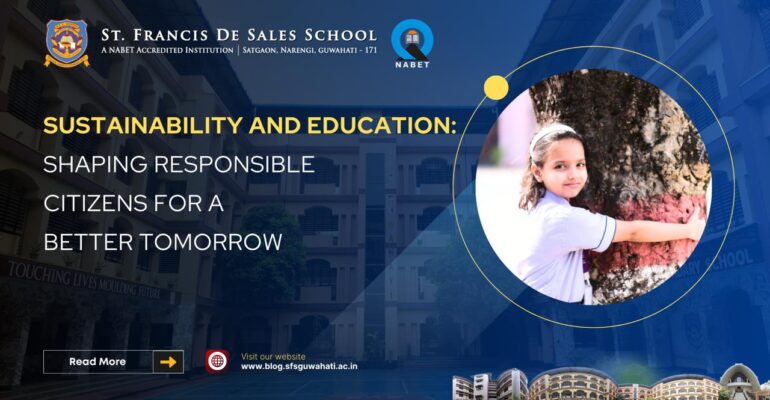
The world today is at a crucial turning point. Climate change, environmental degradation, rising pollution levels, and rapid loss of natural resources have made sustainability not just important, but essential. As we look toward the future, one truth stands out clearly: education plays a powerful role in building a sustainable and responsible global community. Schools and educational institutions are no longer just places of academic learning, they are spaces where values, habits, and mindsets are shaped for life.
What Sustainability Means in a Modern World
Sustainability is often understood as protecting nature, but its meaning goes deeper. It refers to a way of living that meets the needs of the present without compromising the ability of future generations to meet their own needs. This includes responsible use of natural resources, environmental conservation, social well-being, and economic balance. A sustainable society chooses long-term responsibility over short-term convenience.
Why Sustainability Must Begin With Education
The foundation for a sustainable mindset begins the moment a child enters school. When sustainability becomes part of learning, it becomes part of life. Education has the power to transform awareness into action. Through lessons, activities, and real-life examples, students learn how human behaviour affects the planet and how mindful actions can repair and protect it.
For instance, when students learn about water scarcity, they begin valuing every drop. When they understand the impact of plastic waste, they become conscious consumers. Education helps develop critical thinking, empathy, and accountability, qualities essential for sustainable living.
Schools as Models of Sustainable Practice
Teaching sustainability is meaningful only when it is also demonstrated. Schools can serve as powerful examples by adopting eco-friendly practices such as:
- Reducing single-use plastics
- Segregating and recycling waste
- Encouraging use of renewable energy
- Planting and maintaining green spaces
- Promoting digital work to reduce paper consumption