
Srimanta Shankardev: From Borgeet to Satriya Dance – Lessons of Harmony for Today’s Students
August 24, 2025 2025-08-24 15:00Srimanta Shankardev: From Borgeet to Satriya Dance – Lessons of Harmony for Today’s Students
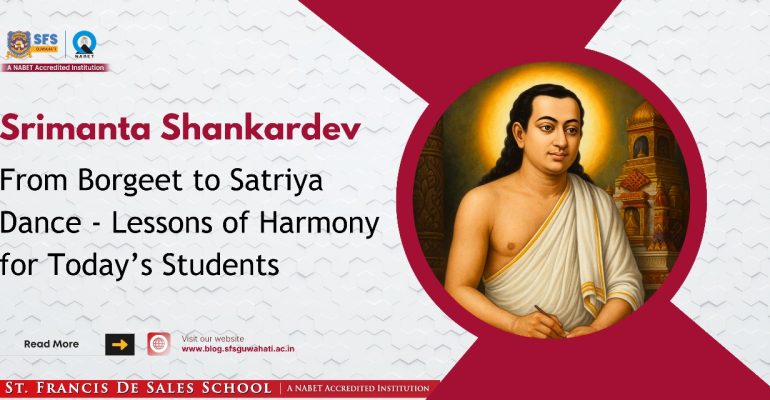
Srimanta Shankardev: From Borgeet to Satriya Dance – Lessons of Harmony for Today’s Students
When we talk about the cultural pride of Assam, one name shines above all, Srimanta Shankardev (1449–1568). A saint, scholar, poet, musician, dramatist, and social reformer, Shankardev’s contributions go far beyond history. His death anniversary, observed as Tithi, is not only a day of remembrance but also an opportunity to reflect on his extraordinary gifts to Indian heritage.
For students and young learners, Shankardev’s life is an inspiration that blends the richness of Assamese culture, through Borgeet (devotional songs) and Satriya (classical dance) along with timeless teachings of unity, equality, and harmony in diversity.
The Musical Legacy: Borgeet – Songs of the Soul
One of Shankardev’s most enduring contributions is Borgeet, a collection of devotional songs written in Bajravali, a literary language developed during his time. These soulful compositions are not just music but a spiritual experience, guiding listeners towards devotion and peace.
Unlike the exclusive music of royal courts, Borgeet was created for everyone, performed in Namghars (community prayer halls) where people from all walks of life could come together.
For today’s students, Borgeet carries an important lesson: art and music are not only for entertainment but also for building values, inner strength, and a sense of belonging.
Satriya Dance: From Devotion to Classical Recognition
In 2000, UNESCO recognized Satriya as one of the eight classical dance forms of India, but its roots trace back to the 15th century and Shankardev’s vision. Through his Ankiya Naat (one-act plays), Shankardev used Satriya as a powerful medium to teach moral values, devotion, and unity.
Performed in Satras (monastic institutions) and Namghars, Satriya combined graceful movements, rhythm, and storytelling to spread messages of truth and equality.
For modern learners, Satriya is not just a cultural art form but a symbol of discipline, creativity, and heritage. It proves that art can educate, inspire, and preserve traditions for generations to come.
Philosophy of Unity: Harmony in a Diverse World
Beyond his artistic genius, Srimanta Shankardev’s most profound legacy is his Neo-Vaishnavite philosophy that emphasized devotion to one God, equality, and harmony. At a time when society was divided by caste, religion, and social status, he established Namghars as open, democratic spaces where people prayed, learned, and served together.
This inclusive vision is especially relevant in today’s multicultural world. His philosophy reminds us that true spirituality lies in respecting diversity, overcoming prejudice, and working together for peace.
Why Students Should Learn from Srimanta Shankardev
For young learners, Shankardev’s life carries lessons that remain as relevant today as they were centuries ago:
- Cultural Pride – Borgeet and Satriya remind students of Assam’s rich cultural roots.
- Equality and Inclusivity – His teachings inspire learners to break barriers of caste, creed, or class.
- Creative Education – Shankardev showed that learning is holistic - art, music, and drama are as important as books.
- Unity in Diversity – His philosophy guides students to celebrate differences while nurturing harmony.