
IMPORTANCE OF MENTAL HEALTH FOR CHILDREN
September 4, 2022 2022-09-04 0:00IMPORTANCE OF MENTAL HEALTH FOR CHILDREN
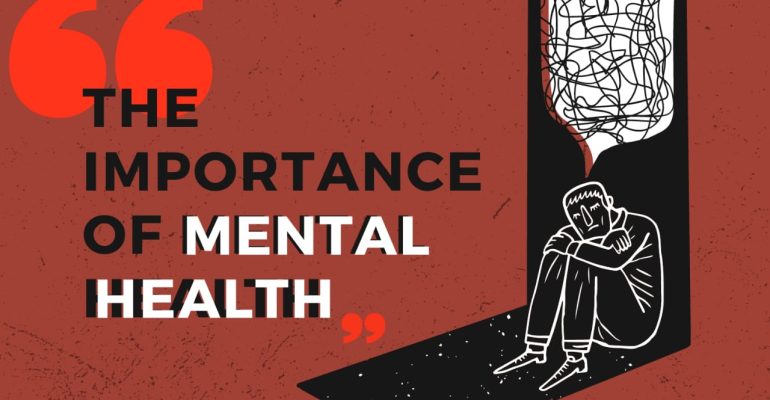
“Is mental health awareness among children important?”. The answer to this should definitely be nothing but a yes! Mental health includes our entire being – our emotional, social, and psychological self. It affects what we sense, how we feel, how and what we think, and eventually leads to how we behave. The foundation of every adult is laid in their childhood, so it is imperative that the foundation of sound mental health is also laid in the formative years. Every stage of human life and mental health are connected – from infancy to childhood, to adolescence, to adulthood, and finally to old age. Neither of the stages is more important or less important.
Children should be made aware that just like our physical health, we have mental health. We give importance to food and exercise to develop physically, similarly, we must understand the importance of mental health awareness. Giving priority to our thoughts and feelings can help us develop the power to face all the challenges that life would throw at us. An honest conversation with the children will be best when we say, all who have a body have to think of their physical health and all who have a brain have to think of mental health. Strategies to have healthier and happier children should be our paramount priority.
Sound mental health is fundamental for a child’s success in life – be it in school or with companions. When we install such a growth mindset in ourselves and our children, there will be no stigma attached to mental health. Shame should never block the path to take help.
Everyone (including children) can be nervous and scared sometimes. Encouragement should be given to recognize thoughts and feelings and talk about them. No one needs to worry alone and it’s OKAY to ask for help; this should be the clear message conveyed to children.
Moods and thoughts change constantly, so offering empathy and being understanding gives confidence to the child, rather than being judgmental and offering solutions. Unconditional love and no rationing in awarding praise whenever the child does something good is highly recommended. A listening ear is a good beginning and giving instructions can follow later. Substituting nagging and yelling with disciplining with respect is something I endorse. The ultimate aim should be, “I want my child to be happy”, so their strengths and weaknesses, both should be accepted. Happiness is the main component of mental health. Everyone is born a happy child; we lose it somewhere on the way while growing up. Growing up at any age is not so easy and becomes questionable when we try to keep pace with others around us and others’ expectations of us. Life does not come with an instruction booklet and each one has to face the music they listen to. Empower the children to have faith in themselves and their abilities and they shall be able to move mountains and live a healthy, happy life.
How Schools can help enhance the mental health of their students-
Many schools are already integrating mental health promotion and planning into their current curriculum and activities. However, this may be happening in an Adhoc or incidental manner. Environments that promote mental health are safe, inclusive, and empowering. Schools can integrate mental health into their current activities by:
• acknowledging integrated health promotion (including mental health promotion) as an area of priority in strategic planning processes • discussing mental health promotion as part of school well-being team meetings and exploring possibilities for cross-curricular approaches to integrated mental health teaching and learning • developing lesson plans and delivering curriculum in a way that links mental health to other health activities. This might include: – discussing how physical activity and healthy eating affect mental health – outlining the connection between mental illness and drug use, outlining the connection between mental illness and substance use – discussing the link between body image and mental health • exploring mental health in the context of promoting positive and respectful relationships. This may include exploring the negative effects on the mental health of bullying and cyberbullying. Subjects such as Drama and English can allow students to act, watch, read or write about mental health issues • promoting positive mental health through inclusive group sporting activities encourages teamwork, new relationships, physical activity, etc.
Having good mental health is key to the healthy development and well-being of every child. Kids need good mental health - not only to be able to deal with challenges and adapt to change, but so they can feel good about themselves, build healthy relationships with others and enjoy life. A child’s mental health can be influenced by many things, like family circumstances, school life, and life events. While children can experience mental health issues at any age, they are most at risk between the ages of 12 and 16 years. Because these are the tender years of age.
Hence, learning to take proper care of the younger ones, and identifying problems should be addressed as taking care of mental health is as important as taking care of physical health. It is similar to the fact that whenever we face any difficulty regarding our physical health, we immediately go to the doctor and get ourselves treated but why not do the same when there is some problem with our mental health as well? That’s the stigma and taboo we need to break into and take care of everyone who is in need of help, in fighting mental health issues and raise awareness in society regarding the importance of mental health, especially for the younger ones.